Paling vs Lapped and Capped Fencing: Which Is Right for Your Property?
By Bryce Roadley
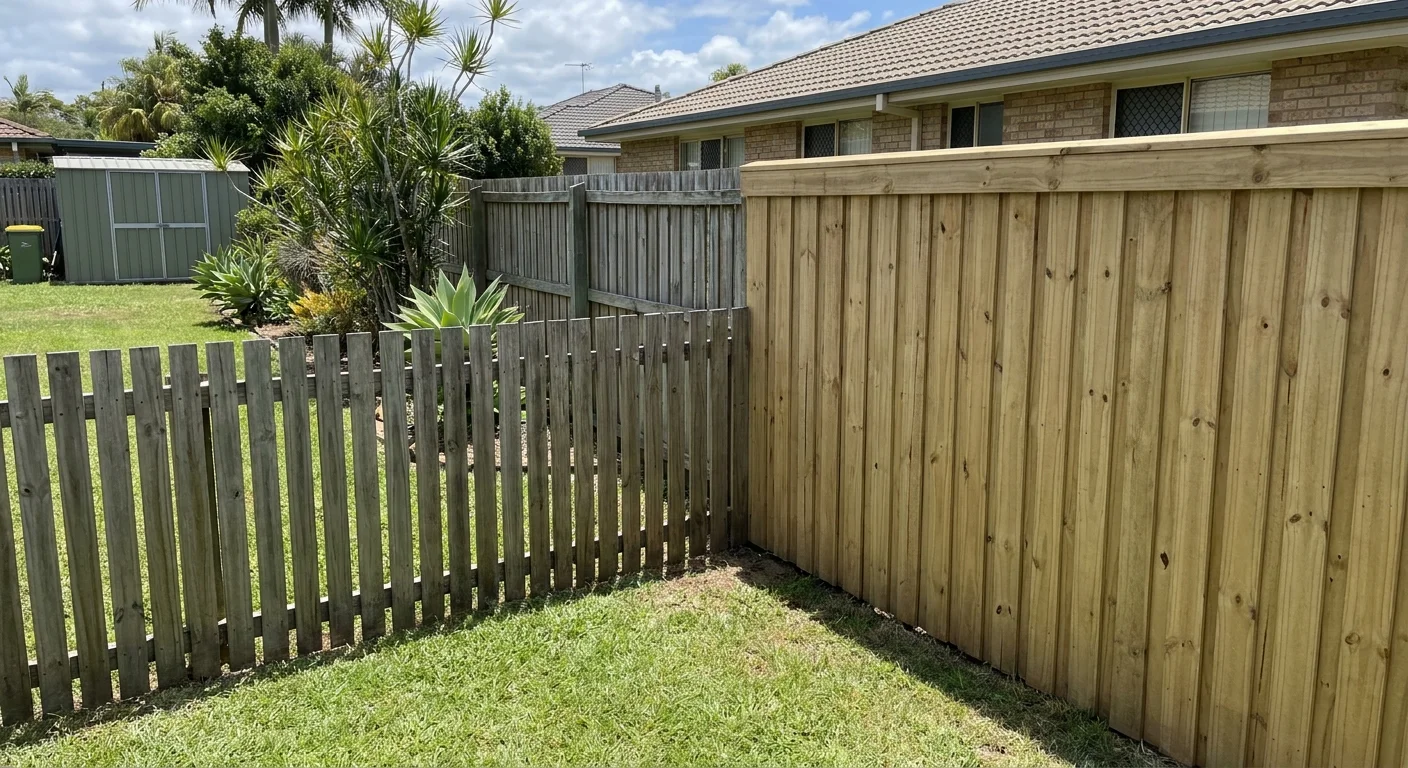
Two Popular Fence Styles, One Important Decision
When Gold Coast homeowners choose a new pine fence, the decision usually comes down to two styles: standard paling or lapped and capped. Both are built from treated pine. Both provide privacy and boundary definition. But they differ in appearance, durability, and cost.
This comparison covers what matters so you can choose the right pine fencing style for your property.
What Is a Paling Fence?
A standard paling fence is the most common fence style in Australian backyards. Vertical timber palings are nailed to horizontal rails that run between posts. The palings sit side by side with a small gap between them, or they can be butted together for full privacy.
Key features:
- Simple, functional construction
- One “good side” faces out (the side without visible rails)
- Quick to install
- Most affordable pine fence option
- Standard height is 1.8 metres
You will see paling fences on most residential streets across the Gold Coast. They do the job well and have done for decades.
What Is a Lapped and Capped Fence?
A lapped and capped fence uses overlapping palings instead of side-by-side placement. Each paling overlaps the one beside it by 20 to 30 millimetres. The top and bottom of the palings are enclosed by horizontal capping rails, creating a neat, framed appearance.
Key features:
- Overlapping palings eliminate gaps
- Capping rails protect the end grain of each paling
- More polished, finished appearance
- Still has one “good side” unless built as a good neighbour style
- Better wind resistance due to the overlap
The overlap and capping make this style sturdier and longer-lasting, particularly in the Gold Coast’s humid, storm-prone climate.
Head-to-Head Comparison
Appearance
Paling fences are straightforward and utilitarian. They look fine, but they are clearly a basic fence. The exposed tops of the palings and the visible rail on one side give them a simple, no-frills character.
Lapped and capped fences look more refined. The capping creates clean horizontal lines at the top and bottom, and the overlapping palings give the fence a more solid, substantial appearance. If street appeal matters to you, lapped and capped is the stronger choice.
Durability
This is where lapped and capped fences have a clear advantage. The capping rails protect the most vulnerable part of the paling: the end grain at the top. End grain absorbs moisture like a sponge. Without capping, water soaks in and accelerates rot, even in treated timber.
The overlap between palings also adds structural rigidity. Lapped and capped fences flex less in wind and are less likely to lose individual palings during storms.
A standard paling fence on the Gold Coast typically lasts 12 to 18 years. A well-built lapped and capped fence can last 18 to 22 years.
Privacy
Both styles provide good privacy at standard 1.8-metre height. However, paling fences with gaps between the palings allow some visibility. If full privacy matters, you need to specify “butted” palings (no gaps) for a paling fence.
Lapped and capped fences have no gaps by design. The overlapping palings ensure complete privacy without needing to specify anything extra.
Wind Resistance
The Gold Coast cops strong winds during storm season, particularly between November and March. Lapped and capped fences handle wind better for two reasons: the overlapping palings create a more rigid panel, and the capping rails distribute force across the top of the fence rather than concentrating it on individual paling tops.
If your property is exposed to prevailing winds, such as on elevated blocks in suburbs like Robina, Varsity Lakes, or Burleigh Waters, lapped and capped is worth the extra investment.
Cost
Paling fencing is the more affordable option. You can expect to pay $75 to $100 per lineal metre installed, compared to $100 to $130 for lapped and capped. On a typical 40-metre residential boundary, the difference is roughly $1,000 to $1,200.
For a detailed breakdown of pricing, see our pine fencing cost guide.
Which Style Should You Choose?
Choose paling if:
- Budget is your primary concern
- The fence is along a rear boundary that nobody sees
- You plan to sell the property soon and want to minimise spending
- The fence line is short and the cost difference is small enough to not matter (in which case, consider lapped and capped anyway)
Choose lapped and capped if:
- You want your fence to last longer
- The fence is visible from the street or from your entertaining area
- Your property is exposed to wind
- You value the cleaner, more finished appearance
- You are investing in your property for the long term
A Third Option: Good Neighbour
If the main concern is fairness between you and your neighbour, consider a good neighbour fence. This style looks identical from both sides, eliminating the “good side/bad side” issue entirely. It costs slightly more than lapped and capped but avoids any disputes about which neighbour gets the better view.
Combine Your Fence with a Landscape Upgrade
A new fence is often part of a larger backyard improvement. If you are also thinking about new garden beds, turf, or a complete garden redesign, working with a team that handles both fencing and landscaping means one point of contact, coordinated scheduling, and a cohesive result.
Need help choosing? Contact Green Fingers Property Care and we will visit your property, discuss your options, and provide a quote for the style that suits your needs and budget.
Related Articles:
Need Help with Your Project?
Get a free, no-obligation quote for your landscaping or fencing project on the Gold Coast.
Get a Free Quote